Skip to content
Call three suppliers about the same job and you will get three different answers on counter mat minimum order quantity. One says fifty. One says two hundred and fifty. The third says there is no minimum at all. Then it quotes a per-unit price that makes fifty look like a bargain.
Same product. Same artwork. Completely different rules. The number is not arbitrary, though it looks that way from the outside. No supplier ever volunteers to explain it. It falls out of how the shop prints the mat, and once you know that, the quotes stop looking random.
What a counter mat minimum order quantity actually pays for
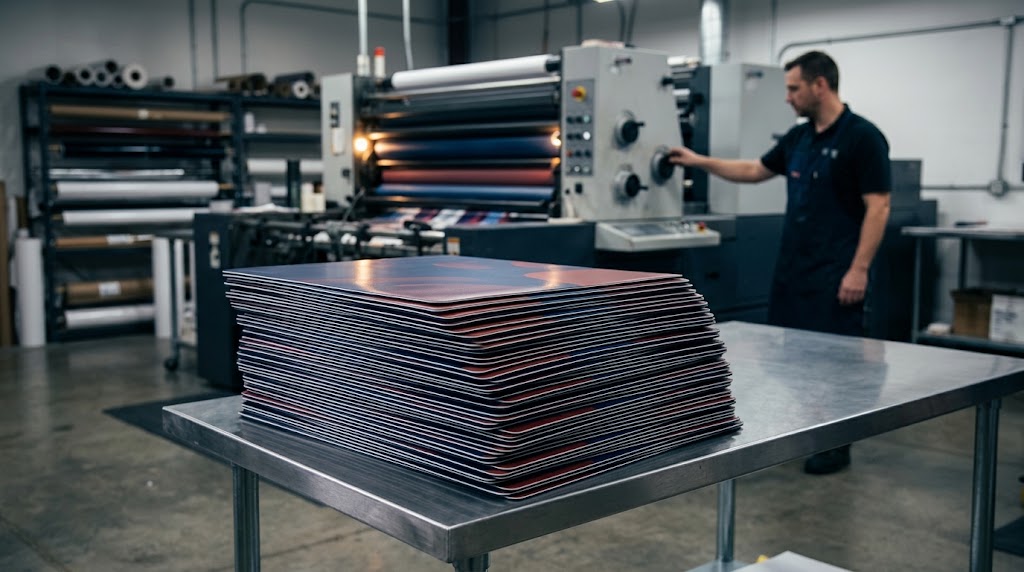
Almost every cost in custom printing lands before the first mat comes off the line. Someone preps your artwork and checks the color separations. Then they set up the press, run test sheets, and adjust until the output matches the proof.
That work costs the same whether you order ten mats or a thousand. A counter mat minimum order quantity exists to spread that Setup cost across enough units. That way it does not swallow the entire job. Think of it like pouring a foundation. Same slab whether you build one story on it or six.
Run the arithmetic and it stops being mysterious. Ten mats against four hundred dollars of setup means each mat carries forty dollars. That is before anyone touches a roll of material. Two hundred mats against the same setup carries two dollars. That is the whole logic. It explains why per-unit pricing drops sharply through the first few hundred units, then flattens out.
How the print method sets your counter mat minimum order
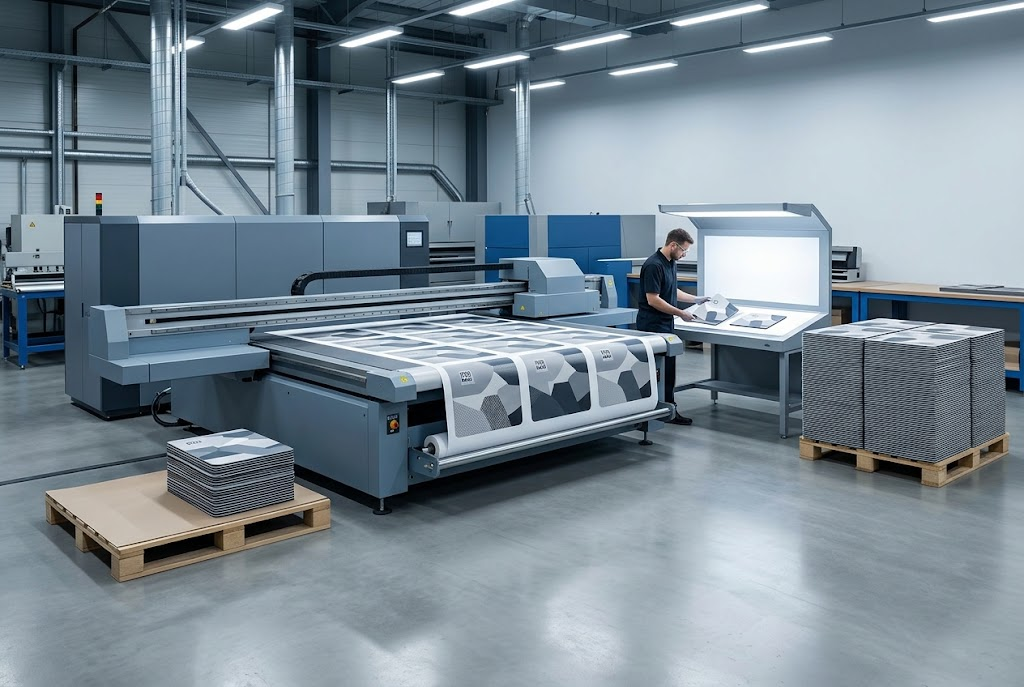
This is the part most suppliers never explain. Different printing processes have wildly different setup burdens, so they land on wildly different minimums.
Screen printing needs a physical screen made for every color in your design. Four colors, four screens. That is real labor and real materials before a single mat exists, which pushes minimums up fast.
Digital and dye-sublimation printing skip most of that. The artwork goes to the press as a file, so the setup burden is closer to a rounding error. Minimums drop accordingly, and short runs become genuinely viable.
So when a supplier quotes a high minimum, the useful question is not “can you go lower.” It is “what process are you running.” A shop quoting two hundred and fifty is often just telling you, indirectly, that they screen print everything. They will not put it like that. They will call it policy. Our breakdown of dye-sublimation versus surface printing covers what that difference means for the finished mat.
Be careful with the suppliers who say there is no minimum
No minimum sounds like the friendliest offer on the table. Sometimes it is. Often the supplier folds the setup cost quietly into the per-unit price instead of stating it out loud.
You order twelve mats, pay a comfortable-looking price per mat, and never see the line item. It did not disappear. It just moved somewhere you were not looking. Then you reorder the same twelve next quarter and pay it again. You pay setup every single time you place a small order.
A stated counter mat minimum order quantity is at least honest about where the money goes. The version with no minimum is not automatically worse. Still, ask what a run of a hundred costs before you decide which one is cheaper.
Work out the counter mat minimum order quantity you actually need
Most buyers order for today’s counter, then get two surprises later. Mats wear out, and businesses open locations.
Start with how many counters you have. Add a spare for each one. A Counter Mat that takes a bleach spill on a Tuesday needs replacing on Tuesday. The reprint will not land for another week. Counters do not wait politely. Then add whatever your realistic expansion looks like over the next year or two.
For a single store that might be four mats against a minimum of fifty, which is genuinely awkward. For a chain running twenty registers it is closer to sixty before you have thought about it properly. At that point the minimum stops being a constraint at all.
Sensible purchasing planning applies here the same way it does to any other business asset. If you are building that forecast for the first time, the US Small Business Administration’s guidance on managing business purchases is a reasonable place to start.
When it makes sense to push back on a counter mat minimum order
Minimums are firmer at some shops than others. The honest answer is that it depends on what else is running that week.
Two things genuinely help. If your job can share a press run with similar work, you share the setup too. And if you accept a standard size instead of a custom cut, you skip a pricing step entirely.
What rarely helps is asking for a lower number without changing anything about the job. The counter mat minimum order quantity is arithmetic, not a negotiating position. No amount of asking changes what a press setup costs.
The number that matters is cost per counter per year
Buyers fixate on the minimum because suppliers give it to them first. It is rarely the number that decides anything.
A hundred mats at three dollars each will last two years across ten counters. That works out to fifteen dollars per counter per year. Twenty mats at nine dollars each will last eight months. That costs considerably more and puts you back in the reorder queue before you have finished the first campaign. The bigger minimum is often the cheaper decision.
If you are ordering across several sites, start with our guide to bulk counter mat orders. It covers the consistency problems that only show up at volume. You can also see the current wholesale counter mats options. Or send your artwork and quantity over and get a volume quote with the real price breaks attached.