Skip to content
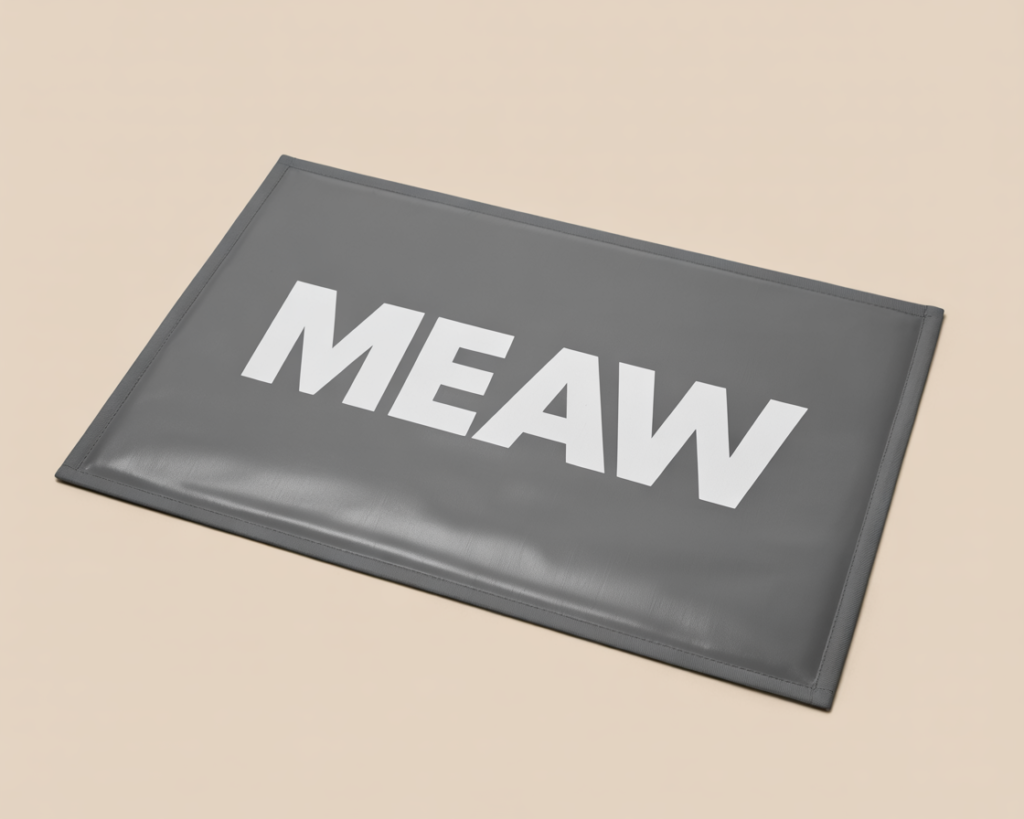
A counter mat looks like a simple purchase until you compare two quotes that differ by a factor of three for what seems like the same product. The price gap usually comes down to a handful of factors buyers don’t see until they ask.
Material drives most of the cost difference
Rubber costs more than vinyl, and vinyl costs more than basic fabric backing. That’s the baseline, but material choice isn’t just about price, it determines how long the mat lasts under daily use. A cheaper mat that needs replacing every year often costs more over three years than a durable mat priced higher upfront. Calculate cost per year of expected use, not just the sticker price, before comparing quotes.
Printing method changes counter mat cost more than people expect
Dye-sublimation printing costs more than surface printing because the process takes longer and produces a more durable result. A mat with dye-sublimation holds its color for years. A surface-printed mat at a lower price point may need reordering within months on a busy counter. Factor the printing method into your cost comparison, not just the base material.
Custom sizing adds cost, but usually less than people assume
Custom dimensions do add a premium over stock sizes, but the gap is often smaller than buyers expect, since most manufacturers already run flexible production for standard mat categories. A poorly fitting stock-size mat that gets replaced within a year costs more in the long run than a correctly sized custom mat that lasts.
Volume changes counter mat cost significantly
A single mat costs the most per unit. Bulk orders drop the per-unit price meaningfully, since setup costs get spread across more units. If you’re outfitting multiple locations or running a promotional campaign across several counters, ask about volume pricing before assuming a single-mat quote scales linearly.
What a low price usually signals
A quote significantly below competitors usually means a tradeoff somewhere: thinner material, surface printing instead of dye-sublimation, or a shorter expected lifespan. That’s not always the wrong choice. A short-term promotional mat doesn’t need the same investment as a permanent checkout fixture. But know which tradeoff you’re making, don’t assume a lower price is simply a better deal.
Calculating real counter mat cost over time
The Small Business Administration recommends evaluating equipment purchases by total cost of ownership rather than sticker price alone, a principle that applies directly here. A mat priced 30 percent higher that lasts three times as long costs less per year of use, even though it looks more expensive on the invoice.
Ready to compare options for your counter? Browse our counter mat collection or check our materials comparison to see how material and printing affect price.